October 1, 2026
Billing
UK Telecoms Billing Compliance Checklist for Resellers
by
The anvil team
Telecoms billing compliance used to be an accounts problem: if the invoice added up and the VAT was right, you were broadly fine. For UK resellers, ISPs and MSPs in 2026, pounds-and-pence price rules, UK GDPR and a fixed PSTN switch-off date have turned it into a question of how your platform handles contracts, tariffs and CDR processing and rating. This piece works through the three regulatory pillars of Ofcom, VAT and GDPR, the five ways billing data breaks when it is spread across disconnected tools, and why billing, CRM and workflow belong on a single customer record. It closes with a 14-point checklist to run against your own estate before you sign with any vendor.

An invoice that adds up is no longer enough. 14 checks your billing platform should pass.
For UK resellers, ISPs and MSPs, pounds-and-pence price rules, UK GDPR and the PSTN switch-off have moved billing compliance out of the accounts team and into the platform itself. Here is what that means in practice, and the 14 points to test your own estate against.
UK Telecoms Billing Checklist for Resellers: Protecting Margin with Modern Rating & CDR Platforms
Introduction: why telecoms billing compliance is now a platform decision
Telecoms billing compliance used to be an accounts problem. If the invoice added up and the VAT was right, you were broadly fine. That is no longer the standard UK telecoms resellers are held to.
Ofcom now requires price rises in consumer and small-business contracts to be set out in pounds and pence at the point of sale, with inflation-linked and percentage-based increases banned for contracts sold from 17 January 2025. The ICO enforces UK GDPR with fines of up to £17.5 million or 4% of global turnover. And with the PSTN switch-off now scheduled for 31 January 2027, thousands of WLR lines are being migrated onto new products, new tariffs and new contracts, each one a fresh chance for a billing error.
Against that backdrop, many UK resellers, ISPs and MSPs are re-evaluating their telecom billing platforms, telecoms rating platforms and CDR rating platforms as part of a wider system upgrade. Whatever the trigger, end-of-life software, a supplier pushing you to the cloud, too many spreadsheets… the question is the same: will the new stack make compliance easier or harder?
Compliance is no longer just about the invoice. It is tied to how your platform handles CDR processing and rating, how it links contracts to tariffs, and how it communicates changes to customers. This article sets out what that means in practice, then gives you a 14-point checklist to work through against your own estate.
Why Billing Compliance Matters for UK Telecom Resellers
For a UK reseller managing a multi-supplier estate such as voice, mobile, broadband, fibre, hosted telephony and IoT SIMs, often across five or more carriers — three things go wrong when billing compliance slips.
Margin. A tariff not updated after a carrier rate change, a bundle applied differently in the CRM and the billing engine, or a usage file that never got rated all cost money. Spread thinly across hundreds of invoices, the losses rarely show up until a customer or an auditor does the arithmetic. Revenue assurance for telecom resellers starts with billing that is provably consistent with what was sold.
Churn. Opaque tariffs and unexpected charges are the fastest way to lose a business customer. If a price rise arrives without proper notice, or a converged services invoice cannot be reconciled to the contract, the customer’s next call is to a competitor — or to Ofcom.
Regulatory exposure. Ofcom’s General Conditions place billing accuracy, contract information and end-of-contract notification duties on the provider, not on the carrier behind it. You own the customer relationship, so you own the obligation.
The technology layer decides which way these risks tip. A single-purpose telecoms billing platform that only produces invoices leaves rating logic, contract data and notifications in other tools. Modern telecom rating platforms and CDR rating platforms that share one data model with the CRM and contract record remove most of the manual steps where errors originate.
Core Regulatory Pillars: Ofcom, VAT and GDPR
Telecoms billing compliance in the UK rests on three pillars. A buyer of a UK telecoms billing system should understand each well enough to ask the right questions of a vendor.
Ofcom billing accuracy and pounds-and-pence price transparency
Ofcom’s General Conditions require that bills are accurate and that customers receive clear contract information, including notice of contract changes. Since January 2025, any in-contract price rise in a new consumer or small-business contract must be stated up front in pounds and pence, with the date it takes effect.
For a reseller, this touches three events: onboarding (the contract summary shows the exact future price), the annual price-rise cycle (the increase applied matches what was written down), and PSTN switch-off and WLR migrations (a migrated line needs a new, compliant contract and tariff, not an amended legacy one).
A modern telecoms billing platform should hold contracted price-rise terms on the customer record, apply them automatically on the correct date and generate the notification from the same data. That closes the gap between what sales promised and what billing charges.
UK VAT and tax treatment for telecom services
Telecoms services are standard-rated for UK VAT, but reseller invoices are rarely simple. Bundled products, hardware sold alongside services, mixed-rate items and non-UK customers all create edge cases, and a multi-service invoice needs each line correctly coded with totals that reconcile to your accounts package.
A UK telecoms billing system should apply VAT rules per product line, not per invoice, and export a clean itemised feed to finance. If your team corrects VAT by hand after the bill run, the platform is not doing its job.
GDPR and data protection in CDR storage, rating and billing communications
Call detail records are personal data: they show who called whom, when and for how long. Storing them for rating, keeping them for disputes and presenting them on itemised bills all fall under UK GDPR.
The practical requirements are retention limits, access controls, a log of who viewed or exported usage data, and secure delivery of bills. A CDR rating platform with role-based access and logged exports satisfies these by design. Spreadsheets emailed between colleagues do not.
From CDR Processing to Telecoms Rating Platform: Getting the Data Right
Most compliance failures in UK reseller billing trace back to data handling rather than intent. When CDR processing and rating are spread across a carrier portal, a rating tool, a spreadsheet of sell rates and a separate invoicing system, five things break:
- Usage goes missing. A late or malformed carrier file that nothing flags is not billed. The carrier still charges you.
- Buy and sell rates drift. Carrier re-banding is not mirrored in your sell tariff, and margin erodes silently.
- Bundle rules diverge. Contract, CRM and rating engine no longer agree on the allowance.
- Disputes take days. Proving a charge means reconstructing it from three systems.
- Audits stall. Nobody can show a continuous trail from raw CDR to invoice line.
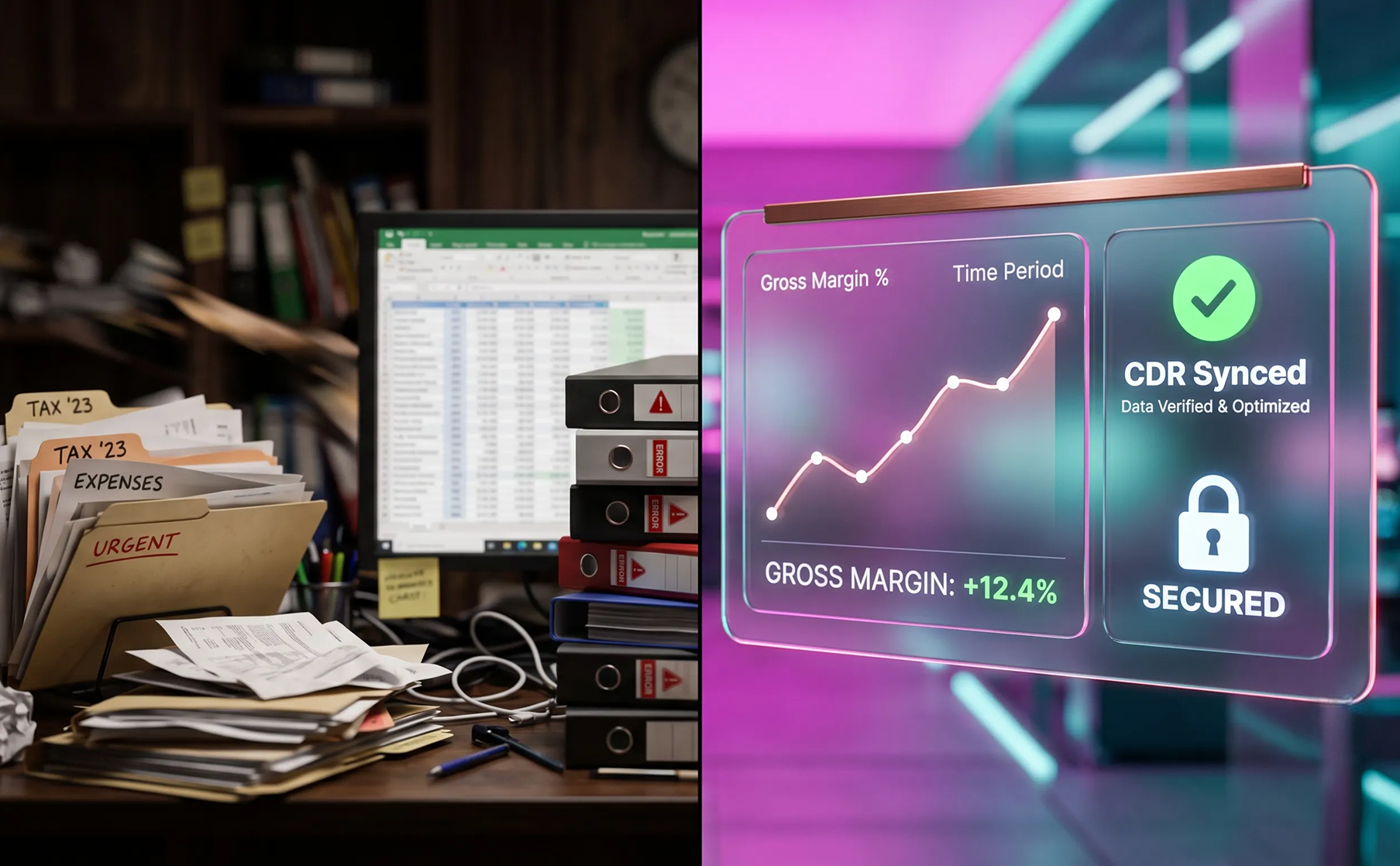
Telecoms CDR processing and analytics on a single platform changes this. Ingestion validates each carrier file on arrival and flags gaps. Rating applies one tariff library to every record. Margin analysis compares buy cost to sell price before the bill run, not after. Invoicing draws on the same rated data, so itemisation matches the charge.
That is revenue assurance for telecom resellers built in rather than bolted on: fewer disputes, faster resolution, and an audit trail that exists because the platform produced it.
Aligning Telecom Billing Platforms with CRM, Workflow and Compliance
Even a strong CDR rating platform cannot fix a broken handover from sales. When CRM, order management and billing sit in separate systems, the failures are predictable: a contract signed on one tariff and billed on another; a discount agreed by email that never reaches the bill; an end-of-contract notification missed because the renewal date lives only in the CRM; a price-rise letter sent to a customer whose contract excludes it.
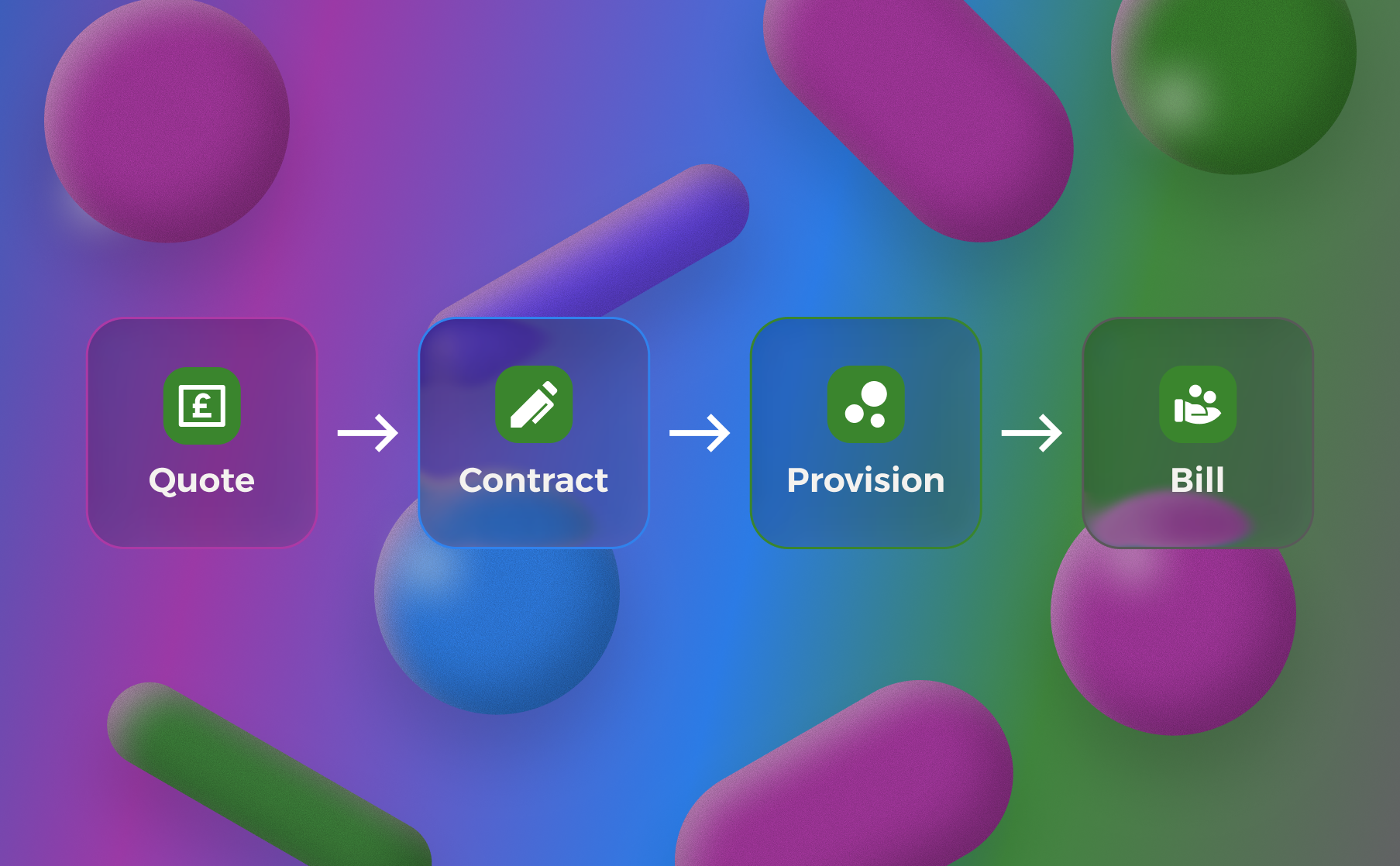
The strongest telecom billing platforms act as a commercial operating system rather than an invoicing engine. Quote-to-cash runs on a single customer record: the quote sets the tariff, the e-signed contract locks the price-rise terms, provisioning workflow triggers the billing start date, the telecoms rating platform rates usage against the contracted tariff, and compliance checks run at each stage rather than at month-end.
In that model, telecoms billing compliance stops being a review step and becomes a property of the process. The invoice is correct because contract, tariff and rating logic were never allowed to diverge.
UK Telecoms Billing Compliance Checklist for Resellers
Work through the following against your current estate. Each item names the compliance area, what good looks like operationally, and what a robust telecoms billing platform, telecoms rating platform or CDR rating platform should do by default.
- Pounds-and-pence price-rise terms on every eligible contract. Every consumer and small-business contract sold since 17 January 2025 states any in-contract increase as a fixed amount and a date. Your telecoms billing platform should store these terms on the customer record and apply them automatically, rejecting any manual percentage uplift.
- Contract-to-tariff match. The tariff billed is the tariff signed. Good practice is a single source of truth from quote to invoice; the platform should block a bill run where a live service has no matching contracted tariff.
- Notice of contract changes. Customers receive compliant notice of material changes, with the right to exit where Ofcom rules require it. The platform should generate notifications from contract data, log delivery and hold a copy against the account.
- End-of-contract and annual best-tariff notifications. Renewal dates and current-tariff comparisons are surfaced automatically. CRM and billing should share one renewal record so nothing is missed between systems.
- CDR ingestion completeness. Every carrier file for the period is received, validated and reconciled to expected volumes before rating. A CDR rating platform should flag late, missing or malformed files rather than silently rating what arrived.
- Usage-based rating consistency. One tariff library, one set of bundle and cap rules, applied identically to voice, mobile, data, SMS and IoT usage. Telecoms rating platforms should version tariffs with effective dates so a change never rewrites historic charges.
- Buy-to-sell margin check before invoicing. Carrier cost is compared with rated sell price per customer and destination every cycle. The platform should surface negative-margin lines and unrated usage before invoices are released.
- VAT accuracy on multi-service invoices. Each line carries the correct VAT treatment, including bundles, hardware and non-UK customers, and totals reconcile to your accounts package. A UK telecoms billing system should code VAT per product and export itemised journals rather than invoice totals.
- Itemisation and bill clarity. Bills show what was charged, at what rate, for which service, in plain language. The telecoms billing platform should present converged services on one document without losing the detail behind each charge.
- GDPR-compliant CDR storage and retention. Raw and rated usage data is held with defined retention periods, role-based access and logged exports. CDR rating platforms should enforce retention policy centrally rather than relying on manual deletion.
- Secure billing communications. Invoices, itemisation and notifications go out through authenticated portals or encrypted channels, and the customer’s data-subject rights can be met from a single record.
- Audit trail from CDR to invoice line. Any charge can be traced back through rating to the source record, with a timestamped history of tariff and contract changes. This should be a native feature of the CDR rating platform, not a report someone builds on request.
- Dispute handling with evidence. Complaints are logged, investigated against rated usage and resolved within defined timescales, with credits applied through the same platform. A joined-up telecoms billing platform should let a service desk resolve a billing query without leaving the customer record.
- PSTN switch-off and WLR migration control. Every migrated line gets a new compliant contract, tariff and start date, and the legacy service is ceased in billing on the correct day. The platform should run migration as one workflow across CRM, provisioning and billing, so no customer is billed for both old and new service.
How Modern Telecoms Rating Platforms Protect Margin and Compliance
Put the checklist alongside a legacy or single-purpose telecoms billing system and the pattern is clear. Manual approaches rely on people remembering: to update the sell tariff, to check the carrier file arrived, to send the notification, to keep the audit trail. Each is a point where margin leaks or a rule is missed.
Modern, integrated telecom billing platforms and CDR rating platforms replace those dependencies with defaults:
- Automated CDR rating validates and rates every carrier file against one tariff library, so unbilled usage is caught the same day.
- Versioned tariff libraries apply buy-rate changes and contracted sell rates with effective dates, protecting margin without rewriting history.
- Revenue assurance tools run margin and anomaly checks before the bill run, turning month-end surprises into pre-release exceptions.
- Configurable notifications generate price-rise, contract-change and end-of-contract communications from contract data and log them against the account.
- Built-in audit trails give you a defensible answer to Ofcom, the ICO or a customer within minutes.
The result is control: over margin, because cost and price are compared continuously; over auditability, because every charge is traceable; and over customer trust, because the bill matches the contract every time.
Conclusion: make compliance a selection criterion, not an afterthought
UK telecoms resellers choosing a telecoms billing platform or telecoms rating platform in 2026 face rising regulatory expectations, more converged estates and a PSTN switch-off on a fixed timetable. Compliance capability is therefore a core selection criterion, not a line on a vendor’s feature list, and it should be tested against a checklist like this one before any contract is signed.
The platforms that make it easiest unify CDR processing and rating, billing, CRM and workflow on a single customer record a commercial operating system rather than a billing tool. That is what turns telecoms billing compliance from a monthly review into a resilient UK telecoms billing system that protects margin by design.
Audit your estate against the 14 points above this week. Then book a demo of anvil, the telecoms billing platform and CDR rating platform purpose-built for UK telecom resellers, ISPs and MSPs. We will run the checklist against your live tariffs, contracts and CDR feeds and show you where the gaps are.
Enquire today at sales@anvilhub.com or call 0800 048 4848.
In Summary:
Make the bill match the contract, every time
Telecoms billing compliance in 2026 is settled long before the bill run, by whether the contract, the tariff and the rated usage all come from the same record. Pounds-and-pence price rules, UK GDPR on call data and a fixed PSTN switch-off date all punish the gaps between systems, and those gaps are exactly where margin leaks. Work through the 14 points against your own estate this week, and if more than a couple come back as manual workarounds, book a demo of anvil and we'll show you which checks your current stack is quietly leaving to memory.