May 28, 2026
Billing Solutions
The Future of Telecoms Billing: Choosing the Right Commercial Operating System for 2026
by
The anvil team
Telecom billing platforms in 2026 must unify CRM, contracts, and billing to handle regulatory shifts, complex products, and customer expectations.

The role of the telecom’s billing platform is being redefined
Three forces are driving this shift.
The first is regulatory pressure. Ofcom's rules on inflation-linked, mid-contract price rises took effect on 17 January 2025, requiring residential and small-business providers to express any in-contract price changes in pounds and pence at point of sale. The PSTN and ISDN switch-off, now scheduled for completion by 31 January 2027, is driving one of the largest customer-base migrations in UK telecoms history. Making Tax Digital has made digital VAT submission mandatory for every VAT-registered business. Each places new demands on the system that prices, invoices and audits the customer relationship.
The second is product complexity. UK resellers and MSPs rarely sell connectivity in isolation. Mobile, hosted voice, SIP, broadband, IoT SIMs, managed security, cloud subscriptions and outcome-based services frequently appear on the same agreement, often with mixed commercial models on a single invoice.
The third is customer expectation. Buyers shaped by SaaS purchasing patterns expect itemised, real-time visibility of usage and spend, self-service portals, API-driven account management and proactive exception handling. What were differentiators five years ago are increasingly buying criteria today.
Industry-leading telecoms billing platforms have responded by evolving from rating engines into the commercial system of record, connecting CRM, contract, billing and revenue assurance on a shared data model. The question for UK resellers and MSPs in 2026 is no longer which platform produces accurate bills. It is which platform can run the business.
Industry-leading telecom billing platforms in 2026 lead on automation, real-time data, integrated CRM and contract management, and architectures that adapt to ongoing regulatory and product convergence.
Intelligent billing operations, not just rating engines
Industry-leading platforms now treat billing as a continuous operations layer, not a monthly batch process. The critical features:
- Real-time and near-real-time rating across mobile, fixed line, SIP, broadband, hosted voice and IoT, surfacing margin and exception data within hours, not at month-end.
- Assisted revenue assurance anomaly detection on usage spikes, supplier reconciliation drift and unusual call patterns.
- Native UK tax and regulatory automation for VAT, reverse charge, partial exemption and Making Tax Digital obligations.
- Bundles, caps and shared allowances at scale for pooled minutes, shared data, rollover rules and customer-specific caps without manual scripting.
- Self-healing billing cycles that detect failed feeds, alert and recover automatically.
Future-facing watch: The shift from monthly to continuous billing operations. By 2027, customers will expect live usage and live margin visibility; resellers without a streaming-data-ready platform will struggle to compete.
Commercial flexibility built for an unpredictable market
UK telecoms pricing has fragmented. Customers buy bundled connectivity, consumption-based mobile data, hosted voice per user, IoT per SIM and managed services per device, sometimes all in one contract. Critical features:
- Per-service, per-partner and per-customer tariffs, configured by commercial teams without engineering tickets.
- Multi-year contract handling with CPI, RPI or fixed price uplifts, presented in line with Ofcom transparency rules.
- Hybrid commercial models combining commitment, consumption and outcome-based pricing in one contract.
- Promotion and discount engines for time-bound offers, retention deals and partner incentives.
- Margin guardrails for automated alerts when a quote, contract or customer slips below target.
Future-facing watch: Convergent billing. As resellers expand into cloud, security, SaaS resale and IoT-as-a-service, billing platforms must handle non-telecoms revenue lines on the same engine. Telecoms-only silos will limit growth.
Integration as a strategic capability
In 2026, integration is the difference between a platform and a tool. The value of billing data compounds when it flows freely across the stack. Critical features:
- Two-way CRM integration so opportunities, orders and customer records stay aligned with billing.
- Native accounting connectors to Xero, Sage, QuickBooks and NetSuite, with nominal code mapping.
- Modern payment gateways like GoCardless for UK B2B Direct Debit, Stripe for cards, and SEPA for European customers with automated dunning.
- Direct carrier feeds from Gamma, BT Wholesale, TalkTalk Business, Vodafone, Virgin Media O2 and many others.
- Customer and partner portals that deflect tickets, surface usage and lift NPS without adding headcount.
- API-first architecture with documented REST APIs and webhooks for every future integration.
Future-facing watch: Agentic workflows. AI agents that read CRM data, monitor billing exceptions and trigger renewals are entering production. Open APIs and clean event streams plug straight in. Closed platforms will not.
The convergence of CRM, billing and contract management
This is where the category is heading and where most resellers still have the biggest gap. The standard pattern of three best-in-class systems (CRM for sales, billing for finance, contract management for operations) creates data drift, re-keying, and a quote-to-cash process that loses information at every handoff.
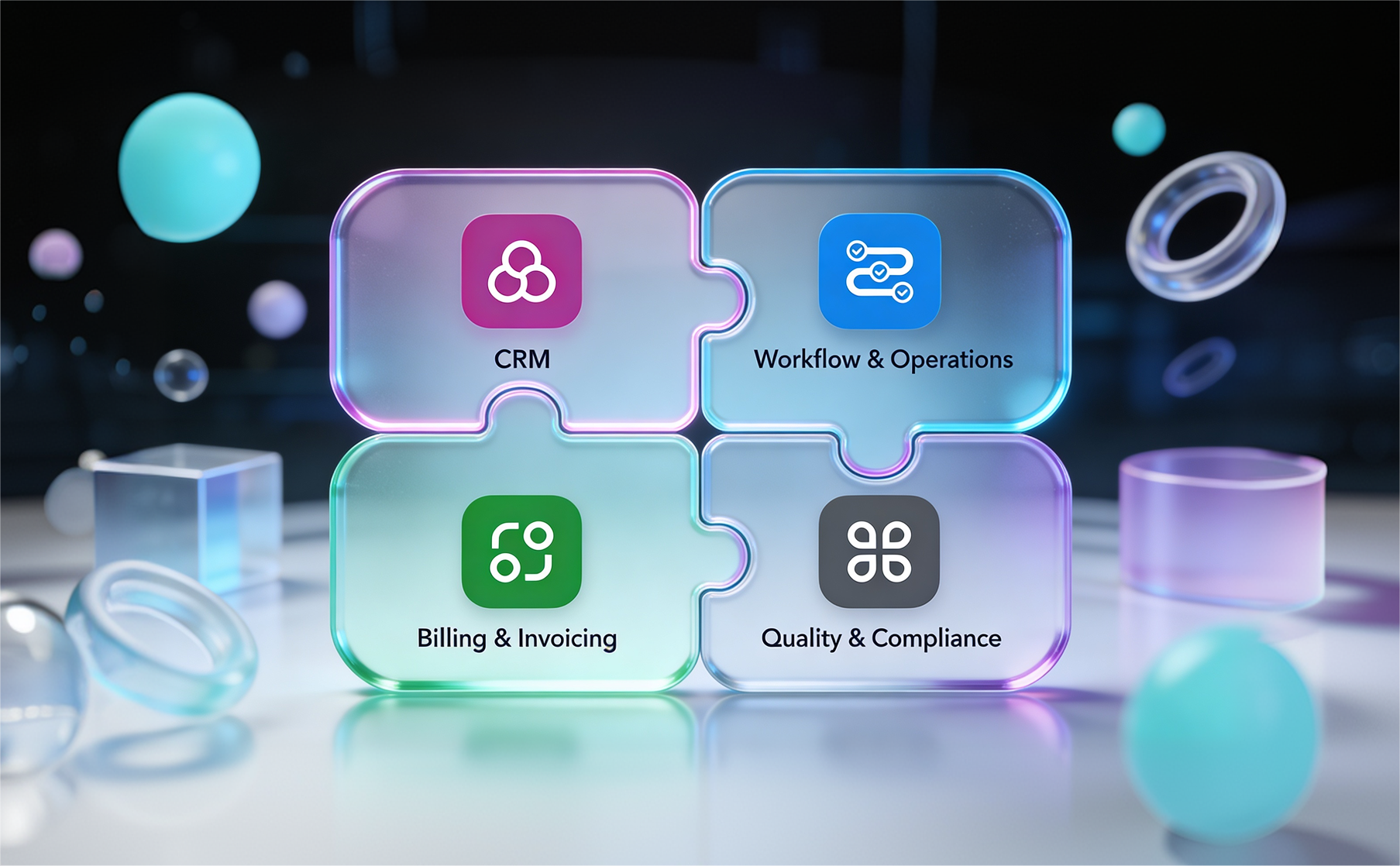
Industry-leading telecoms billing solutions for resellers in 2026 close that gap by unifying CRM, billing and contract management on a shared data model:
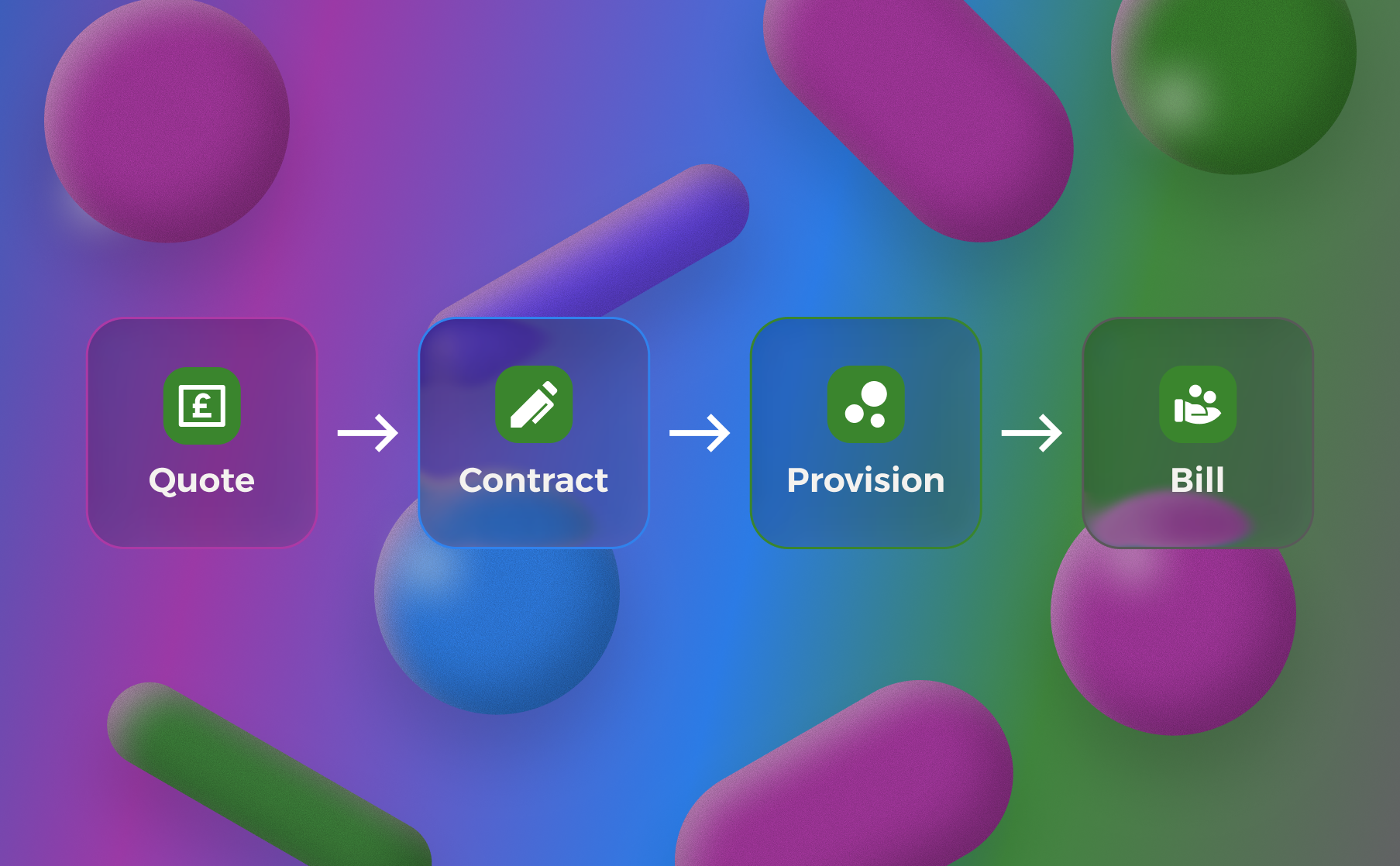
- Quote-to-cash on one record. Opportunity to contract to order to bill, one source of truth, no re-keying.
- Renewal and price-review intelligence. Contract end dates, auto-renewal clauses and price-review triggers live alongside billing data.
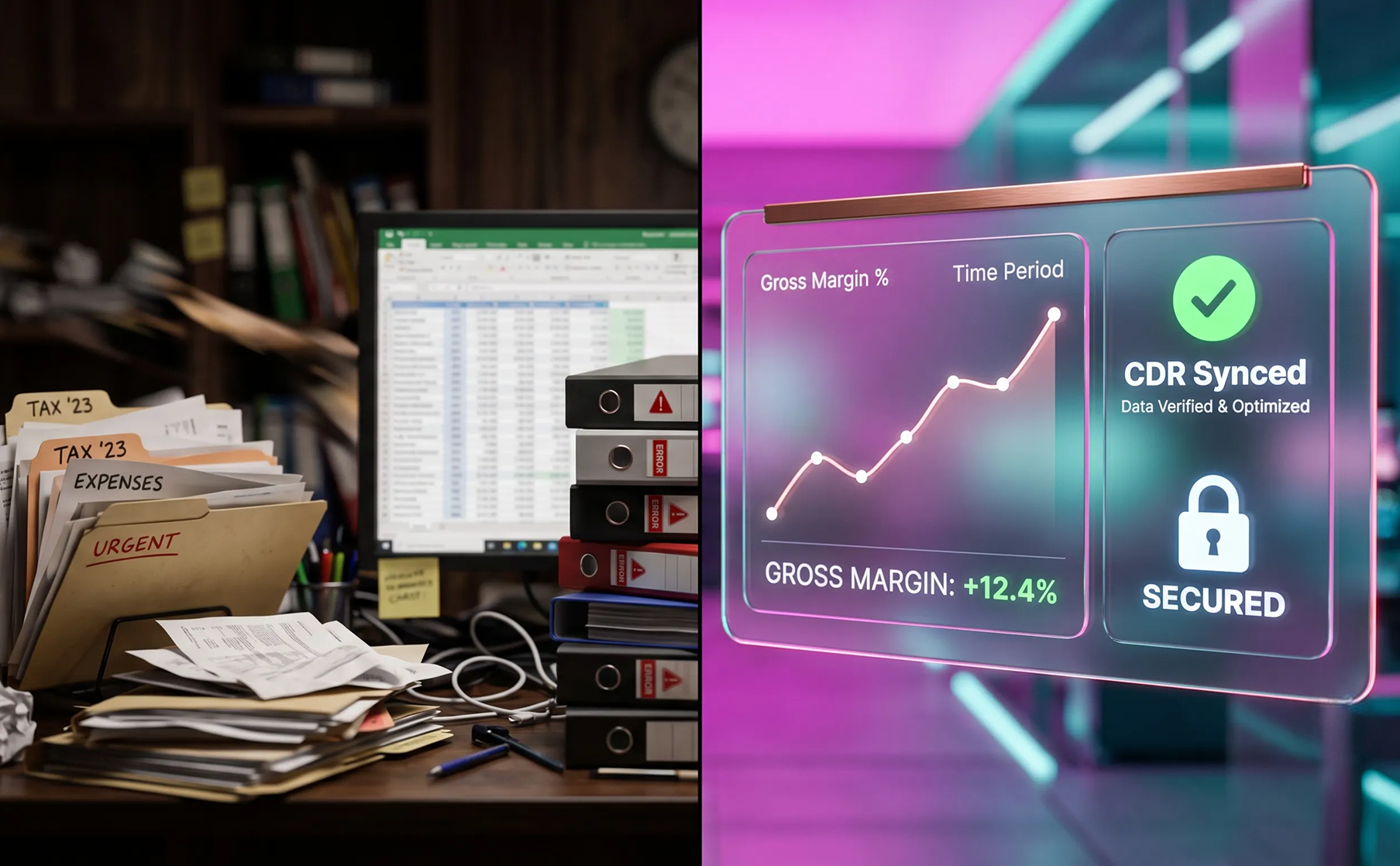
- Integrated margin reporting for cost-of-sale, supplier costs and recurring revenue refreshed continuously.
- Compliance readiness for One Touch Switch, GDPR data subject requests and Ofcom end-of-contract notifications.
- Faster onboarding from signed contract to first bill in days, not weeks.
Future-facing watch: Generative AI inside the platform drafting renewal proposals, summarising contract changes, and surfacing up-sell opportunities from billing patterns. That capability only works when CRM, billing and contract data live together.
What "future-proof" actually looks like
A telecoms billing platform sits at the centre of revenue, customer experience and compliance. Switching cost is high. Future-proofing the decision means asking two questions of every shortlisted vendor:
- Where is the platform investing? Public roadmap, release cadence, and the share of R&D going into AI, automation and convergent billing.
- How composable is the architecture? API-first, event-driven and modular platforms adapt to whatever the market does next. Monolithic platforms, even feature-rich ones, increasingly struggle to keep pace.
The category description "telecoms billing software UK" undersells the decision. The real choice in 2026 is which commercial operating system the business will run on for the next five years.
Conclusion: why operators choose anvil
The modern telecoms billing platform is now a customer-facing product, and the right combination of portal, payments and self-service can turn billing into a renewal driver.
anvil brings CRM, contracts and billing into a single platform, purpose-built for telecoms operators, MVNOs and resellers, backed by a UK-based team that knows the commercial models inside out.
See our customer portal in action
- Watch a 10-minute walkthrough of the anvil customer portal.
- Book a portal tour with our team, and we will run the session against a sample of your own product catalogue and contract terms.
No procurement commitment required.
In Summary:
The role of the billing platform has shifted from a simple rating engine to a central commercial operating system. anvil provides a unified platform for CRM, contracts, and billing, enabling UK resellers and MSPs to automate compliance, handle complex product mixes, and meet modern customer expectations. Transition to a future-proof system and turn your billing operations into a strategic advantage with anvil.