May 14, 2026

Billing Solutions

Modern Telecoms Billing: Essential Portals, Payments & Self-Service Features for 2026

by

Aron Teacher

Modern telecoms billing requires portals, flexible payments, and real-time usage data on a unified platform to meet 2026 customer expectations.

What Modern Telecoms Billing Platforms Must Offer: Portals, Payments & Self-Service

Your customers expect more than a PDF invoice in 2026

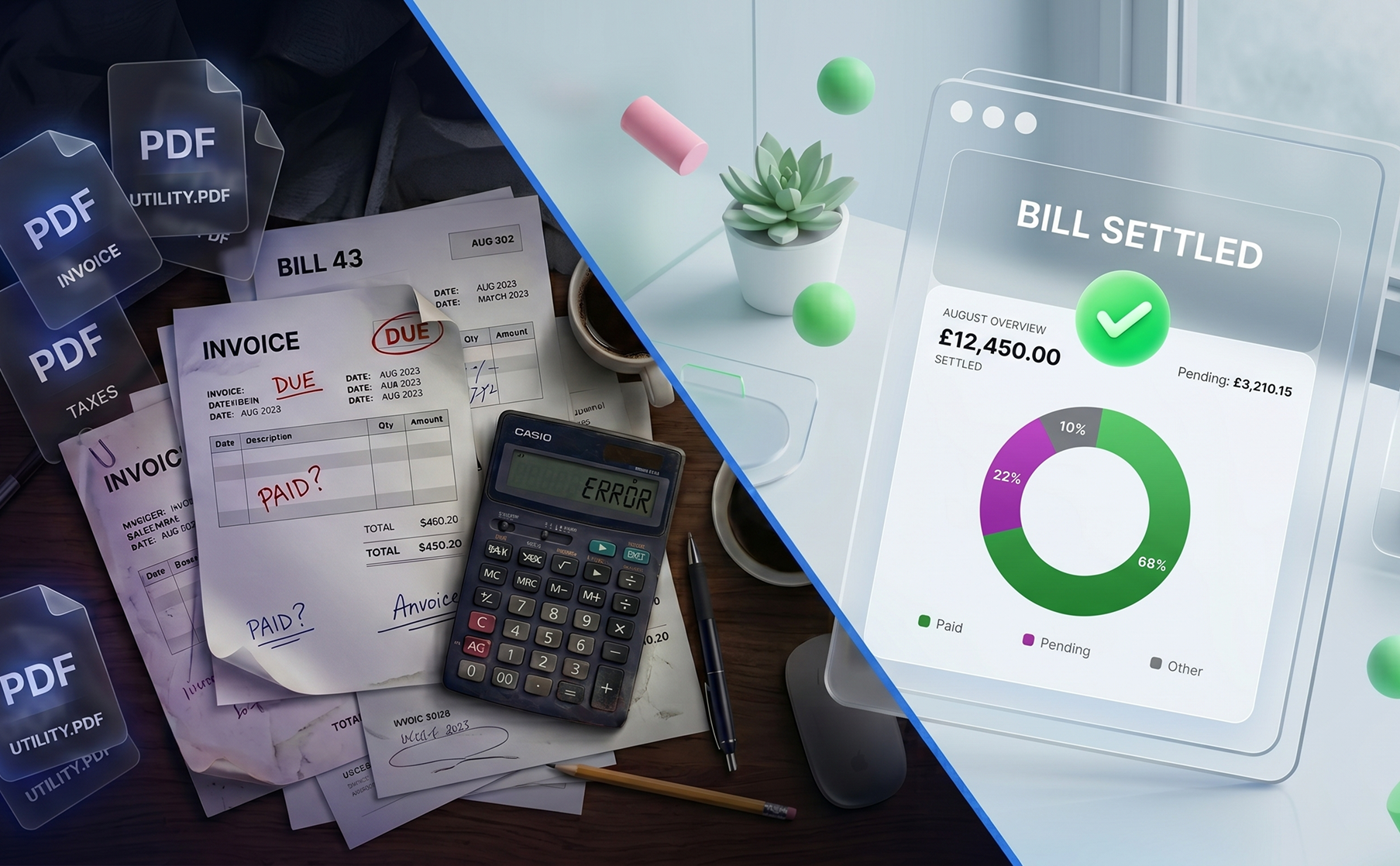
Telecoms buyers have stopped tolerating month-end surprises. They expect to log in, see live usage, settle a bill in two clicks, and raise a query without picking up the phone. If your billing experience still relies on emailed PDFs and manual chase-ups, you are losing renewals to operators who have moved on.


This guide sets out what a modern telecoms billing platform must deliver in 2026, and it focuses on the three features buyers ask about first: customer portals, payment flexibility, and end-to-end self-service. In this 2026 guide, we will also cover what to ask any vendor before you sign and why these capabilities only work properly when sharing one platform.


How customer expectations have shifted


B2B telecoms buyers increasingly apply consumer-grade benchmarks to every supplier interaction. Tools like Stripe, Monzo and AWS have shaped the following expectations:


  • Always-on access: Account information available 24/7, not only when an account manager is at their desk.
  • Live usage and spend visibility: A complement to the end-of-month bill, with consumption visible as it accrues and gentle alerts before thresholds are reached.
  • Real-time payments: Direct debit, card-on-file and instant bank transfer, alongside more traditional methods.
  • Self-service options: Updating a payment method, obtaining a VAT invoice or disputing a line item can feel time-consuming and tedious over email; many customers now prefer to handle these tasks in-app.
  • Transparency: Easy access to contract terms, the rate card, and the calculation behind every charge.


The commercial impact is well-documented. Operators who lean into these expectations often see:


  • ✔️ Lower cost-to-serve
  • ✔️ Higher CSAT scores
  • ✔️ Fewer disputes and stronger renewal rates


Access and payment flexibility in standard RFPs


There is also a regulatory tailwind. Ofcom continues to encourage greater billing clarity and dispute handling for business customers, and Pay.UK is supporting direct debit modernisation through ongoing Bacs scheme updates. Vendors who keep pace with these standards make life easier for the operators they serve.


Features to look for in a modern telecoms billing platform


Use the checklist below when evaluating any vendor.


1. A branded telecom billing customer portal


The telecom billing customer portal is the front door to the account relationship. The strongest portals tend to be:


  • White-labelled and on your domain: the customer experience feels like yours, not the vendor's.
  • Role-based: finance contacts see invoices and payment data; technical contacts see services and usage; and admins who need to see everything.
  • Mobile-responsive: most portal logins now need to be mobile user friendly.
  • Single sign-on ready: SAML or OIDC for enterprise customers.
  • Audit-logged: every download, dispute and change captured for compliance.


A great portal goes beyond hosting PDF invoices. The benchmark in 2026 is a workspace that lets a customer self-serve the majority of routine account tasks at a time that suits them.


2. Multi-payment options including direct debit and payment gateways


Telecoms billing with direct debit and card payments is now expected as standard. A modern platform typically supports:


  • Direct Debit (Bacs) with paperless mandate setup, AUDDIS, ADDACS and ARUDD handling.
  • Card payments via stored, tokenised cards with PCI-compliant vaulting.
  • 3D Secure and Strong Customer Authentication compliance for card transactions.
  • Open banking and pay-by-bank for instant settlement without card fees.
  • Multi-currency and multi-entity support for cross-border trading.
  • Auto-retry logic for failed collections, with configurable dunning rules.
  • Payment plans for customers under temporary pressure.


The ROI tends to be quick. Operators that broaden their payment mix to include direct debit often see DSO drop by 15 to 30 days and a meaningful reduction in bad-debt write-offs.


3. Real-time usage views


As customers move beyond traditional calls and SMS into mobile data, SIP trunking, IoT connectivity and cloud telephony, expectations around usage visibility have grown. A modern platform should offer:


  • Live consumption dashboards by service, site, user or SIM.
  • Threshold alerts triggered by spend, data volume or international traffic.
  • Drill-down from total to single line item information.
  • Exportable data in CSV for the customer's own analytics stack.
  • Forecasting that projects month-end spend based on consumption to date.


4. Built-in dispute workflow


Disputes are part of the rhythm of any service relationship, and a clear workflow protects your business operations and relationships. Look for:


  • In-portal dispute raising against any line item, with required evidence fields.
  • Status tracking so the customer can see where their query sits.
  • SLA timers for first response and resolution.
  • Automated credit notes once a dispute is upheld, with full audit trail.
  • Reporting that shows dispute volume, resolution time and root cause by product line.


5. Notifications and reminders


Communication works best when it is programmatic rather than manual. The platform should send:


  • New invoice notifications via email and SMS.
  • Pre-collection reminders ahead of direct debit runs.
  • Failed-payment alerts with one-click retry.
  • Usage threshold warnings to help customers avoid surprises.
  • Contract renewal and end-of-term reminders tied to the contract record.
  • Service change confirmations whenever an order is provisioned or terminated.


Why CRM, contracts and billing features work best on a unified platform


Many billing solutions present the portal as a layer over a billing database, with CRM and contract data living elsewhere. However, this approach can cause risks and can be disjointed when trying to reconcile data.

A unified backend addresses these points at the architectural level. When the same record powers the CRM view, the contract document, the rated bill and the customer portal, the customer sees:


  • The contract they actually signed.
  • The services currently provisioned.
  • The usage rated against the agreed tariff.
  • The invoice that reconciles to both.


What the customer experience looks like with anvil


Here is how a typical anvil portal session plays out for a B2B telecoms customer:


  1. Log in via SSO or branded login on the operator's own domain.
  2. Land on a dashboard that shows current spend versus budget, last invoice status, and any open disputes or quotes awaiting approval.
  3. Drill into live usage by service, site or user including roaming, data and call traffic rated against the actual contract.
  4. Approve a quote for an additional SIM or service, which writes back to CRM, generates a contract amendment, and flows straight to the next bill cycle.
  5. Update payment details, switch from invoice-on-account to direct debit, or replace a stored card.
  6. Raise a dispute on a line item, attach supporting evidence, and track resolution.
  7. Download historical invoices, VAT statements and contract documents.
  8. Set spend alerts for individual users, sites or services.


Helpful questions to ask vendors before you sign


When you shortlist a telecoms billing platform, take this list into the demo:


  1. Show me a live portal where the contract, services, usage and invoice all reconcile to the same source of truth.
  2. Walk me through a direct debit run, including a failed collection and auto-retry.
  3. Demonstrate a dispute lifecycle from customer raise to credit note, including the audit trail.
  4. Talk me through the data model: is CRM, contract and billing one system, or separate systems with overnight syncs?
  5. Show the audit log for a single customer over the last 90 days, including portal logins and self-service actions.


Conclusion


The modern telecoms billing platform has evolved from a back-office system into a customer-facing product. anvil delivers all of the above on a unified Sales CRM, contracts and billing backend, so the portal your customers see consistently reflects the truth of their account.


See our customer portal in action


  • Watch a 10-minute walkthrough of the anvil customer portal.
  • Book a portal tour with our team.

"In 2026, integration is the difference between a platform and a tool."

In Summary:

Modernising your billing platform is essential for meeting 2026 customer expectations for transparency and self-service. anvil’s unified CRM, contract, and billing solution helps operators reduce costs while delivering a superior customer experience.

Ready to stop missing revenue?

Let's talk about how anvil can make your billing day a routine, not an event. Schedule a free, no-obligation demo with one of our specialists today.

Request a Demo

Anvil website content

CRM

Anvil website content

Workflow & Operations

Anvil website content

Billing & Invoicing

Anvil website content

Quality & Compliance

Contact

Anvil website content

sales@anvilhub.com

Anvil website content

0800 048 4848

Product

Anvil website content

CRM

Anvil website content

Workflow & Operations

Anvil website content

Billing & Invoicing

Anvil website content

Quality & Compliance

Anvil website content

vM2M

Solutions

By Industry

Essentials

Access

Complete

Insights/Resources

Blog

Q&A / Learn

More

About Us

Contact Us

Login/Sign Up

Help Centre

Privacy Policy

Terms & Conditions

Code of Practice

Anvil website content
Anvil Web Content

Copyright © 2026 anvil. All Rights Reserved.

Made with ❤️ by Quench.London

May 14, 2026

Billing Solutions

Modern Telecoms Billing: Essential Portals, Payments & Self-Service Features for 2026

by

Aron Teacher

Modern telecoms billing requires portals, flexible payments, and real-time usage data on a unified platform to meet 2026 customer expectations.

What Modern Telecoms Billing Platforms Must Offer: Portals, Payments & Self-Service

Your customers expect more than a PDF invoice in 2026

Telecoms buyers have stopped tolerating month-end surprises. They expect to log in, see live usage, settle a bill in two clicks, and raise a query without picking up the phone. If your billing experience still relies on emailed PDFs and manual chase-ups, you are losing renewals to operators who have moved on.


This guide sets out what a modern telecoms billing platform must deliver in 2026, and it focuses on the three features buyers ask about first: customer portals, payment flexibility, and end-to-end self-service. In this 2026 guide, we will also cover what to ask any vendor before you sign and why these capabilities only work properly when sharing one platform.


How customer expectations have shifted


B2B telecoms buyers increasingly apply consumer-grade benchmarks to every supplier interaction. Tools like Stripe, Monzo and AWS have shaped the following expectations:


  • Always-on access: Account information available 24/7, not only when an account manager is at their desk.
  • Live usage and spend visibility: A complement to the end-of-month bill, with consumption visible as it accrues and gentle alerts before thresholds are reached.
  • Real-time payments: Direct debit, card-on-file and instant bank transfer, alongside more traditional methods.
  • Self-service options: Updating a payment method, obtaining a VAT invoice or disputing a line item can feel time-consuming and tedious over email; many customers now prefer to handle these tasks in-app.
  • Transparency: Easy access to contract terms, the rate card, and the calculation behind every charge.


The commercial impact is well-documented. Operators who lean into these expectations often see:


  • ✔️ Lower cost-to-serve
  • ✔️ Higher CSAT scores
  • ✔️ Fewer disputes and stronger renewal rates


Access and payment flexibility in standard RFPs


There is also a regulatory tailwind. Ofcom continues to encourage greater billing clarity and dispute handling for business customers, and Pay.UK is supporting direct debit modernisation through ongoing Bacs scheme updates. Vendors who keep pace with these standards make life easier for the operators they serve.


Features to look for in a modern telecoms billing platform


Use the checklist below when evaluating any vendor.


1. A branded telecom billing customer portal


The telecom billing customer portal is the front door to the account relationship. The strongest portals tend to be:


  • White-labelled and on your domain: the customer experience feels like yours, not the vendor's.
  • Role-based: finance contacts see invoices and payment data; technical contacts see services and usage; and admins who need to see everything.
  • Mobile-responsive: most portal logins now need to be mobile user friendly.
  • Single sign-on ready: SAML or OIDC for enterprise customers.
  • Audit-logged: every download, dispute and change captured for compliance.


A great portal goes beyond hosting PDF invoices. The benchmark in 2026 is a workspace that lets a customer self-serve the majority of routine account tasks at a time that suits them.


2. Multi-payment options including direct debit and payment gateways


Telecoms billing with direct debit and card payments is now expected as standard. A modern platform typically supports:


  • Direct Debit (Bacs) with paperless mandate setup, AUDDIS, ADDACS and ARUDD handling.
  • Card payments via stored, tokenised cards with PCI-compliant vaulting.
  • 3D Secure and Strong Customer Authentication compliance for card transactions.
  • Open banking and pay-by-bank for instant settlement without card fees.
  • Multi-currency and multi-entity support for cross-border trading.
  • Auto-retry logic for failed collections, with configurable dunning rules.
  • Payment plans for customers under temporary pressure.


The ROI tends to be quick. Operators that broaden their payment mix to include direct debit often see DSO drop by 15 to 30 days and a meaningful reduction in bad-debt write-offs.


3. Real-time usage views


As customers move beyond traditional calls and SMS into mobile data, SIP trunking, IoT connectivity and cloud telephony, expectations around usage visibility have grown. A modern platform should offer:


  • Live consumption dashboards by service, site, user or SIM.
  • Threshold alerts triggered by spend, data volume or international traffic.
  • Drill-down from total to single line item information.
  • Exportable data in CSV for the customer's own analytics stack.
  • Forecasting that projects month-end spend based on consumption to date.


4. Built-in dispute workflow


Disputes are part of the rhythm of any service relationship, and a clear workflow protects your business operations and relationships. Look for:


  • In-portal dispute raising against any line item, with required evidence fields.
  • Status tracking so the customer can see where their query sits.
  • SLA timers for first response and resolution.
  • Automated credit notes once a dispute is upheld, with full audit trail.
  • Reporting that shows dispute volume, resolution time and root cause by product line.


5. Notifications and reminders


Communication works best when it is programmatic rather than manual. The platform should send:


  • New invoice notifications via email and SMS.
  • Pre-collection reminders ahead of direct debit runs.
  • Failed-payment alerts with one-click retry.
  • Usage threshold warnings to help customers avoid surprises.
  • Contract renewal and end-of-term reminders tied to the contract record.
  • Service change confirmations whenever an order is provisioned or terminated.


Why CRM, contracts and billing features work best on a unified platform


Many billing solutions present the portal as a layer over a billing database, with CRM and contract data living elsewhere. However, this approach can cause risks and can be disjointed when trying to reconcile data.

A unified backend addresses these points at the architectural level. When the same record powers the CRM view, the contract document, the rated bill and the customer portal, the customer sees:


  • The contract they actually signed.
  • The services currently provisioned.
  • The usage rated against the agreed tariff.
  • The invoice that reconciles to both.


What the customer experience looks like with anvil


Here is how a typical anvil portal session plays out for a B2B telecoms customer:


  1. Log in via SSO or branded login on the operator's own domain.
  2. Land on a dashboard that shows current spend versus budget, last invoice status, and any open disputes or quotes awaiting approval.
  3. Drill into live usage by service, site or user including roaming, data and call traffic rated against the actual contract.
  4. Approve a quote for an additional SIM or service, which writes back to CRM, generates a contract amendment, and flows straight to the next bill cycle.
  5. Update payment details, switch from invoice-on-account to direct debit, or replace a stored card.
  6. Raise a dispute on a line item, attach supporting evidence, and track resolution.
  7. Download historical invoices, VAT statements and contract documents.
  8. Set spend alerts for individual users, sites or services.


Helpful questions to ask vendors before you sign


When you shortlist a telecoms billing platform, take this list into the demo:


  1. Show me a live portal where the contract, services, usage and invoice all reconcile to the same source of truth.
  2. Walk me through a direct debit run, including a failed collection and auto-retry.
  3. Demonstrate a dispute lifecycle from customer raise to credit note, including the audit trail.
  4. Talk me through the data model: is CRM, contract and billing one system, or separate systems with overnight syncs?
  5. Show the audit log for a single customer over the last 90 days, including portal logins and self-service actions.


Conclusion


The modern telecoms billing platform has evolved from a back-office system into a customer-facing product. anvil delivers all of the above on a unified Sales CRM, contracts and billing backend, so the portal your customers see consistently reflects the truth of their account.


See our customer portal in action


  • Watch a 10-minute walkthrough of the anvil customer portal.
  • Book a portal tour with our team.

"In 2026, integration is the difference between a platform and a tool."

In Summary:

Modernising your billing platform is essential for meeting 2026 customer expectations for transparency and self-service. anvil’s unified CRM, contract, and billing solution helps operators reduce costs while delivering a superior customer experience.

Ready to stop missing revenue?

Let's talk about how anvil can make your billing day a routine, not an event. Schedule a free, no-obligation demo with one of our specialists today.

Request a Demo

Anvil website content

CRM

Anvil website content

Workflow & Operations

Anvil website content

Billing & Invoicing

Anvil website content

Quality & Compliance

Contact

Anvil website content

sales@anvilhub.com

Anvil website content

0800 048 4848

Product

Anvil website content

CRM

Anvil website content

Workflow & Operations

Anvil website content

Billing & Invoicing

Anvil website content

Quality & Compliance

Anvil website content

vM2M

Solutions

By Industry

Essentials

Access

Complete

Insights/Resources

Blog

Q&A / Learn

More

About Us

Contact Us

Login/Sign Up

Help Centre

Privacy Policy

Terms & Conditions

Code of Practice

Anvil website content
Anvil Web Content

Copyright © 2026 anvil. All Rights Reserved.

Made with ❤️ by Quench.London

May 14, 2026

Billing Solutions

Modern Telecoms Billing: Essential Portals, Payments & Self-Service Features for 2026

by

Aron Teacher

Modern telecoms billing requires portals, flexible payments, and real-time usage data on a unified platform to meet 2026 customer expectations.

What Modern Telecoms Billing Platforms Must Offer: Portals, Payments & Self-Service

Your customers expect more than a PDF invoice in 2026

Telecoms buyers have stopped tolerating month-end surprises. They expect to log in, see live usage, settle a bill in two clicks, and raise a query without picking up the phone. If your billing experience still relies on emailed PDFs and manual chase-ups, you are losing renewals to operators who have moved on.


This guide sets out what a modern telecoms billing platform must deliver in 2026, and it focuses on the three features buyers ask about first: customer portals, payment flexibility, and end-to-end self-service. In this 2026 guide, we will also cover what to ask any vendor before you sign and why these capabilities only work properly when sharing one platform.


How customer expectations have shifted


B2B telecoms buyers increasingly apply consumer-grade benchmarks to every supplier interaction. Tools like Stripe, Monzo and AWS have shaped the following expectations:


  • Always-on access: Account information available 24/7, not only when an account manager is at their desk.
  • Live usage and spend visibility: A complement to the end-of-month bill, with consumption visible as it accrues and gentle alerts before thresholds are reached.
  • Real-time payments: Direct debit, card-on-file and instant bank transfer, alongside more traditional methods.
  • Self-service options: Updating a payment method, obtaining a VAT invoice or disputing a line item can feel time-consuming and tedious over email; many customers now prefer to handle these tasks in-app.
  • Transparency: Easy access to contract terms, the rate card, and the calculation behind every charge.


The commercial impact is well-documented. Operators who lean into these expectations often see:


  • ✔️ Lower cost-to-serve
  • ✔️ Higher CSAT scores
  • ✔️ Fewer disputes and stronger renewal rates


Access and payment flexibility in standard RFPs


There is also a regulatory tailwind. Ofcom continues to encourage greater billing clarity and dispute handling for business customers, and Pay.UK is supporting direct debit modernisation through ongoing Bacs scheme updates. Vendors who keep pace with these standards make life easier for the operators they serve.


Features to look for in a modern telecoms billing platform


Use the checklist below when evaluating any vendor.


1. A branded telecom billing customer portal


The telecom billing customer portal is the front door to the account relationship. The strongest portals tend to be:


  • White-labelled and on your domain: the customer experience feels like yours, not the vendor's.
  • Role-based: finance contacts see invoices and payment data; technical contacts see services and usage; and admins who need to see everything.
  • Mobile-responsive: most portal logins now need to be mobile user friendly.
  • Single sign-on ready: SAML or OIDC for enterprise customers.
  • Audit-logged: every download, dispute and change captured for compliance.


A great portal goes beyond hosting PDF invoices. The benchmark in 2026 is a workspace that lets a customer self-serve the majority of routine account tasks at a time that suits them.


2. Multi-payment options including direct debit and payment gateways


Telecoms billing with direct debit and card payments is now expected as standard. A modern platform typically supports:


  • Direct Debit (Bacs) with paperless mandate setup, AUDDIS, ADDACS and ARUDD handling.
  • Card payments via stored, tokenised cards with PCI-compliant vaulting.
  • 3D Secure and Strong Customer Authentication compliance for card transactions.
  • Open banking and pay-by-bank for instant settlement without card fees.
  • Multi-currency and multi-entity support for cross-border trading.
  • Auto-retry logic for failed collections, with configurable dunning rules.
  • Payment plans for customers under temporary pressure.


The ROI tends to be quick. Operators that broaden their payment mix to include direct debit often see DSO drop by 15 to 30 days and a meaningful reduction in bad-debt write-offs.


3. Real-time usage views


As customers move beyond traditional calls and SMS into mobile data, SIP trunking, IoT connectivity and cloud telephony, expectations around usage visibility have grown. A modern platform should offer:


  • Live consumption dashboards by service, site, user or SIM.
  • Threshold alerts triggered by spend, data volume or international traffic.
  • Drill-down from total to single line item information.
  • Exportable data in CSV for the customer's own analytics stack.
  • Forecasting that projects month-end spend based on consumption to date.


4. Built-in dispute workflow


Disputes are part of the rhythm of any service relationship, and a clear workflow protects your business operations and relationships. Look for:


  • In-portal dispute raising against any line item, with required evidence fields.
  • Status tracking so the customer can see where their query sits.
  • SLA timers for first response and resolution.
  • Automated credit notes once a dispute is upheld, with full audit trail.
  • Reporting that shows dispute volume, resolution time and root cause by product line.


5. Notifications and reminders


Communication works best when it is programmatic rather than manual. The platform should send:


  • New invoice notifications via email and SMS.
  • Pre-collection reminders ahead of direct debit runs.
  • Failed-payment alerts with one-click retry.
  • Usage threshold warnings to help customers avoid surprises.
  • Contract renewal and end-of-term reminders tied to the contract record.
  • Service change confirmations whenever an order is provisioned or terminated.


Why CRM, contracts and billing features work best on a unified platform


Many billing solutions present the portal as a layer over a billing database, with CRM and contract data living elsewhere. However, this approach can cause risks and can be disjointed when trying to reconcile data.

A unified backend addresses these points at the architectural level. When the same record powers the CRM view, the contract document, the rated bill and the customer portal, the customer sees:


  • The contract they actually signed.
  • The services currently provisioned.
  • The usage rated against the agreed tariff.
  • The invoice that reconciles to both.


What the customer experience looks like with anvil


Here is how a typical anvil portal session plays out for a B2B telecoms customer:


  1. Log in via SSO or branded login on the operator's own domain.
  2. Land on a dashboard that shows current spend versus budget, last invoice status, and any open disputes or quotes awaiting approval.
  3. Drill into live usage by service, site or user including roaming, data and call traffic rated against the actual contract.
  4. Approve a quote for an additional SIM or service, which writes back to CRM, generates a contract amendment, and flows straight to the next bill cycle.
  5. Update payment details, switch from invoice-on-account to direct debit, or replace a stored card.
  6. Raise a dispute on a line item, attach supporting evidence, and track resolution.
  7. Download historical invoices, VAT statements and contract documents.
  8. Set spend alerts for individual users, sites or services.


Helpful questions to ask vendors before you sign


When you shortlist a telecoms billing platform, take this list into the demo:


  1. Show me a live portal where the contract, services, usage and invoice all reconcile to the same source of truth.
  2. Walk me through a direct debit run, including a failed collection and auto-retry.
  3. Demonstrate a dispute lifecycle from customer raise to credit note, including the audit trail.
  4. Talk me through the data model: is CRM, contract and billing one system, or separate systems with overnight syncs?
  5. Show the audit log for a single customer over the last 90 days, including portal logins and self-service actions.


Conclusion


The modern telecoms billing platform has evolved from a back-office system into a customer-facing product. anvil delivers all of the above on a unified Sales CRM, contracts and billing backend, so the portal your customers see consistently reflects the truth of their account.


See our customer portal in action


  • Watch a 10-minute walkthrough of the anvil customer portal.
  • Book a portal tour with our team.

"In 2026, integration is the difference between a platform and a tool."

In Summary:

Modernising your billing platform is essential for meeting 2026 customer expectations for transparency and self-service. anvil’s unified CRM, contract, and billing solution helps operators reduce costs while delivering a superior customer experience.

Ready to stop missing revenue?

Let's talk about how anvil can make your billing day a routine, not an event. Schedule a free, no-obligation demo with one of our specialists today.

Request a Demo

Anvil website content

CRM

Anvil website content

Workflow & Operations

Anvil website content

Billing & Invoicing

Anvil website content

Quality & Compliance

Contact

Anvil website content

sales@anvilhub.com

Anvil website content

0800 048 4848

Product

Anvil website content

CRM

Anvil website content

Workflow & Operations

Anvil website content

Billing & Invoicing

Anvil website content

Quality & Compliance

Anvil website content

vM2M

Solutions

Essentials

Access

Complete

Insights/Resources

Blog

Q&A / Learn

More

About Us

Contact Us

Login/Sign Up

Help Centre

Privacy Policy

Terms & Conditions

Code of Practice

Anvil website content
Anvil Web Content

Copyright © 2026 anvil. All Rights Reserved.

Made with ❤️ by Quench.London